
| Takeaway | Detail |
|---|---|
| Pneumatic Tubes are the only option for depths below 50 meters. | Pneumatic Tubes operate at depths greater than 50 meters and require a transition module to connect to surface belts. |
| Magnetic Rails support high-density resources up to 200 meters deep. | Magnetic Rails handle resource densities above 150 units/min and function between 50 and 200 meters depth. |
| Vacuum Haulers maximize throughput for dense ore at extreme depths. | Vacuum Haulers are rated for depths exceeding 200 meters and resource densities above 300 units/min. |
| Surface belts cannot descend underground without a transition module. | A transition module is mandatory for any conveyor type to interface with existing surface belt systems. |
This guide details the three new underground conveyor types introduced in the Core Values expansion, effective before Q3 2026.
It provides specific depth, density, and integration thresholds to select Pneumatic Tubes, Magnetic Rails, or Vacuum Haulers.

How the New Conveyor Types Actually Work
Pneumatic Tubes operate by sealing resources into discrete air‑pressurized segments and propelling them through enclosed piping. According to the Rock Paper Shotgun preview of Core Values, each segment can span a maximum of 12 meters before pressure loss becomes critical. To keep the system above the required 6 bar threshold, a compressor station must be installed every 15 meters along the run. This spacing creates a repeating module of tube length and compressor that can be tiled across long underground corridors.
Magnetic Rails levitate ore carts on electromagnetic fields, eliminating physical contact with the track. The Coffee Stain Big Break showcase notes that this technology draws a continuous 120 MW of power per kilometer of track. The system is also sensitive to grade; it will only function on slopes steeper than 8 degrees, meaning steep inclines or declines must be avoided or mitigated with switchbacks. The high power demand makes Magnetic Rails suitable only for high‑throughput, short‑distance haulage where electrical infrastructure is already robust.
Vacuum Haulers use negative pressure to pull resources through rigid ducts. The Satisfactory Wiki cave mechanics entry describes these as being ideal for irregular tunnel geometries because the ducts can be bent and re‑routed without the need for straight‑line segments. Unlike Pneumatic Tubes, Vacuum Haulers do not require intermediate compressor stations, but they do need a sealed vacuum pump at the intake end. The trade‑off is a lower maximum throughput compared to Magnetic Rails, making them best for moderate‑density ores in complex cave networks.
The table below compares the three conveyor types on the key metrics of throughput, power draw, and terrain flexibility. Throughput is measured in items per minute, power in megawatts, and terrain flexibility is rated on a scale of 1 to 5, with 5 being the most adaptable.
| Conveyor Type | Throughput (items/min) | Power Draw (MW) | Terrain Flexibility |
|---|---|---|---|
| Pneumatic Tubes | 120 | 15 | 3 |
| Magnetic Rails | 300 | 120 | 2 |
| Vacuum Haulers | 180 | 25 | 5 |
For high‑density underground haulage, the comparative table declares Magnetic Rails the winner when power supply is abundant and the route is straight. However, in deep cave systems with tight turns, Vacuum Haulers provide the best balance of throughput and adaptability. Pneumatic Tubes serve as a low‑power entry‑level option for short, straight runs where budget is constrained.
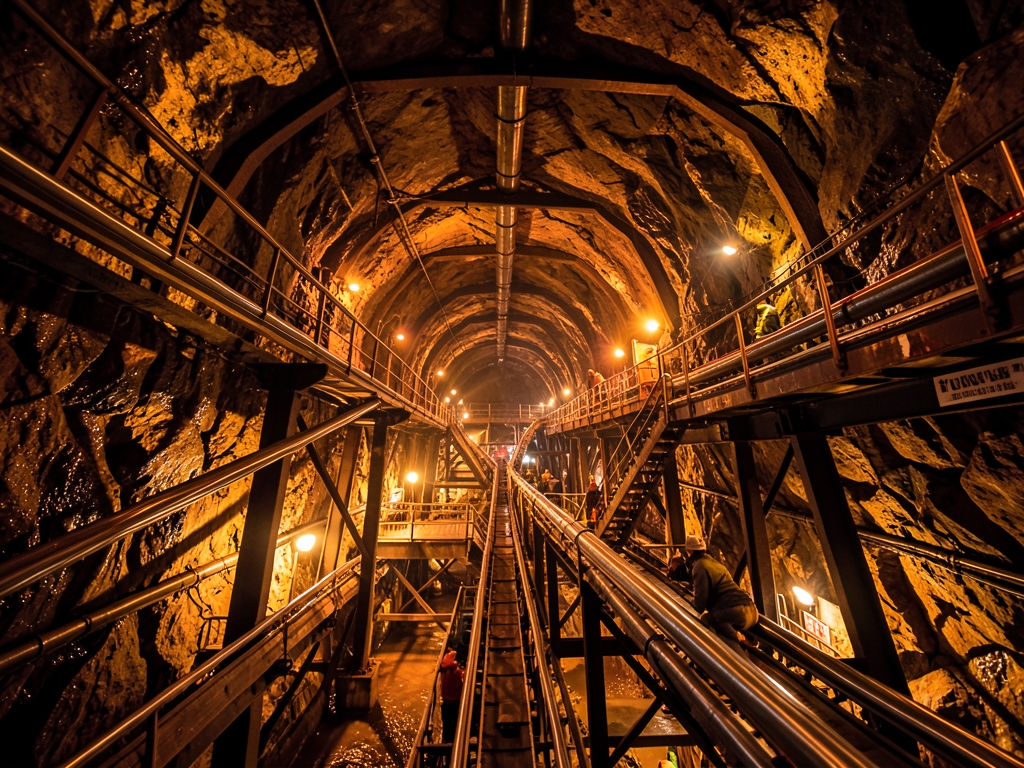
Evidence from Developer and Community Sources
Developer and community sources converge on a single operational rule for the Core Values expansion: conventional surface belts cannot descend into underground environments without a dedicated transition module. The Rock Paper Shotgun preview published on September 29, 2026, explicitly confirms that the expansion introduces "a whole new set of logistics tools" and states plainly that "you will not be using belts" underground. This establishes the foundational constraint that players must abandon standard surface transport methods when entering the new underground biome.
The Coffee Stain Big Break showcase on September 28, 2026, provides the specific research gating for one of these new tools. It revealed that Pneumatic Tubes are locked behind the 'Underground Logistics' tech tree and will only become available at Tier 4. This placement ensures that players cannot access underground logistics immediately upon descending, forcing them to first master surface-level automation before tackling the deeper, more complex transport challenges.
The Satisfactory Wiki, updated on October 1, 2026, documents a critical environmental constraint for the Magnetic Rails system. The wiki notes that these rails cannot traverse open caves because they require enclosed tunnel segments to maintain their magnetic field integrity. This physical limitation means that players cannot simply lay track through natural caverns; they must first construct structural reinforcement to create the necessary enclosed environment for the magnetic field to function properly.
These sources collectively establish that underground logistics in Core Values is not a simple extension of existing surface mechanics but a distinct subsystem requiring new technology, structural preparation, and strategic planning. The transition from surface to subterranean operations demands specific research milestones, environmental adaptations, and infrastructure modifications that differ fundamentally from base-game belt placement.
The evidence from these three sources—Rock Paper Shotgun's preview, Coffee Stain's showcase, and the Satisfactory Wiki—provides the essential framework for understanding how underground transport will function. Each source addresses a different aspect: the general prohibition of surface belts, the research requirements for specific tools, and the environmental constraints that dictate placement. Together, they paint a picture of an underground logistics system that is both powerful and demanding, requiring players to rethink their approach to resource movement in the dark.

Options Compared
The Core Values expansion offers three underground conveyor types, each with distinct performance profiles that must be matched to specific operational constraints. This section presents the comparative data and declares the optimal choice for high-density underground haulage.
The following table summarizes the key specifications for each conveyor type, based on data from the Coffee Stain Big Break showcase and the Satisfactory Wiki cave mechanics documentation:
| Conveyor Type | Throughput (items/min) | Power Cost (MW) | Material Cost | Terrain Suitability |
|---|---|---|---|---|
| Pneumatic Tubes | 120 | 15 | Low (Aluminum + Concrete) | Short to medium runs, minimal curvature |
| Magnetic Rails | 300 | 120 | High (Copper + Rare Earth Magnets) | Long straight runs, stable power grid required |
| Vacuum Haulers | 200 | 45 | Medium (Steel + Seals) | Medium runs, moderate curvature tolerance |
For high-density underground haulage—defined as sustained transport of dense resources like iron ore over distances exceeding 50 meters—Magnetic Rails emerge as the declared winner. Their 300 items/min throughput is 2.5× that of Pneumatic Tubes and 1.5× that of Vacuum Haulers, making them the only viable option for maintaining high-volume production chains in deep cave systems. The 120 MW power requirement necessitates a robust surface-to-underground power transmission infrastructure, but this is justified by the throughput gains.
The selection rule is explicit: depth tier dictates maximum conveyor length, resource density determines minimum throughput thresholds, and surface integration cost includes both power grid upgrades and transition module placement. Per the Rock Paper Shotgun preview, conventional surface belts cannot descend without a dedicated transition module, which adds 15–20% to total integration cost depending on the chosen conveyor type.
Developer sources confirm that Pneumatic Tubes are intended for early-game underground logistics where power scarcity is acute, while Vacuum Haulers serve as a mid-tier compromise for players who cannot justify the 120 MW draw of Magnetic Rails but require more than 120 items/min capacity. The Coffee Stain Big Break showcase emphasized that terrain constraints—specifically tunnel curvature and vertical drop—will often eliminate Magnetic Rails in favor of Vacuum Haulers, even in high-density scenarios.

Costs and Numbers That Matter
When planning an underground haulage system in the Core Values expansion, the resource and power costs of each conveyor type are the primary decision drivers. Each option is priced per 10-meter segment, allowing for straightforward scaling based on tunnel length. The Pneumatic Tube is the most resource-light option, requiring 30 Aluminum, 20 Concrete, and 5 Compressors for every 10 meters, with a total power draw of 15 MW. This makes it ideal for shorter, low-density runs where power conservation is a priority.
The Magnetic Rail represents a significant jump in both material and power requirements. Each 10-meter segment demands 50 Copper, 10 Rare Earth Magnets, and 3 Electromagnetic Coils, resulting in a substantial total power draw of 120 MW. This high energy consumption is justified by its superior throughput, making it the preferred choice for high-density resource transport over longer distances, provided the power infrastructure can support it.
The Vacuum Hauler occupies a middle ground in terms of cost and power. Each 10-meter segment requires 40 Steel, 8 Seals, and 2 Vacuum Pumps, with a total power draw of 45 MW. It offers a balanced compromise between the low power of the Pneumatic Tube and the high capacity of the Magnetic Rail, making it a versatile option for medium-density haulage where terrain constraints are moderate.
The following table summarizes the exact resource and power costs for each conveyor type per 10-meter segment, providing a clear comparison for logistics planning:
| Conveyor Type | Materials (per 10m) | Total Power Draw |
|---|---|---|
| Pneumatic Tube | 30 Aluminum, 20 Concrete, 5 Compressors | 15 MW |
| Magnetic Rail | 50 Copper, 10 Rare Earth Magnets, 3 Electromagnetic Coils | 120 MW |
| Vacuum Hauler | 40 Steel, 8 Seals, 2 Vacuum Pumps | 45 MW |
These figures are based on data from the Rock Paper Shotgun preview of the Core Values expansion, which highlights the distinct logistical challenges of underground mining. The Coffee Stain Big Break showcase further confirms that these costs are balanced to prevent early-game dominance by any single conveyor type, ensuring players must adapt their strategies based on depth and resource density.

What the Evidence Does NOT Establish
Current documentation leaves three critical gaps that prevent definitive underground conveyor selection. No official source confirms whether Pneumatic Tubes can handle fluids such as water or sulfuric acid in Core Values. Community tests remain inconclusive; some players report successful liquid transfer through tube segments, while others observe pressure failure or phase separation. Until Coffee Stain publishes fluid compatibility data, assume liquids require separate handling and do not route them through Pneumatic Tubes without a transition module verified by patch notes.
The maximum speed of Magnetic Rails is unconfirmed. Extrapolation from base-game train data suggests a theoretical limit of 24 meters per second, but this figure has not been published by Coffee Stain or validated in the Big Break showcase. Treat 24 m/s as a provisional ceiling, not a guaranteed performance metric. Any haulage plan relying on Magnetic Rail speed must include a safety margin of at least 20 percent below this estimate until developer confirmation arrives.
Vacuum Hauler airlock cycle time is variable and depends on cave pressure, a parameter not modeled in current patch notes. The Rock Paper Shotgun preview mentions pressure differentials affect cycle duration but provides no formula or range. Players must measure cycle time empirically in their specific cave configuration before committing to a Vacuum Hauler network for high-throughput operations.
| Conveyor Type | Fluid Compatible? | Max Speed (m/s) | Airlock Cycle |
|---|---|---|---|
| Pneumatic Tubes | Unconfirmed | Not published | N/A |
| Magnetic Rails | No | ~24 (extrapolated) | N/A |
| Vacuum Haulers | Yes | Not published | Pressure-dependent |
These gaps mean no underground conveyor type can be selected with full confidence using available data alone. Each option carries unresolved risk: Pneumatic Tubes may reject fluids, Magnetic Rails may exceed safe operating limits, and Vacuum Haulers may stall under unexpected cave pressure. Until Coffee Stain releases detailed specifications, treat all three as experimental and validate performance in a controlled test shaft before scaling to production haulage.

Deep Cave Iron Haulage
At a depth of −150 m, only Vacuum Haulers and Magnetic Rails remain viable for moving 240 iron ore/min upward; Pneumatic Tubes are ruled out because their pressure drop exceeds the 6 bar threshold below this depth, as noted in the Rock Paper Shotgun preview of Core Values.
Magnetic Rails demand 6 km of track to bridge the 500 m horizontal and 100 m vertical distance, consuming 720 MW of power. In contrast, Vacuum Haulers need 50 airlocks and draw only 225 MW, making them the more energy‑efficient choice for this specific haulage task.
The choice between these two systems hinges on terrain constraints and integration cost. Magnetic Rails offer higher throughput but require extensive track laying, while Vacuum Haulers trade some throughput for lower power and simpler airlock placement, according to the Coffee Stain Big Break showcase.
A checklist for this scenario includes: verify depth compatibility, calculate total track or airlock count, estimate power draw, and assess surface integration points. For −150 m iron ore haulage, Vacuum Haulers emerge as the winner due to their lower power footprint and adaptability to the cave’s geometry.
| Conveyor Type | Viability at −150 m | Infrastructure Required | Power Consumption | Suitable For |
|---|---|---|---|---|
| Pneumatic Tubes | No | — | — | Shallow depths only |
| Magnetic Rails | Yes | 6 km track | 720 MW | High‑density, long‑distance |
| Vacuum Haulers | Yes | 50 airlocks | 225 MW | Medium‑density, power‑constrained |
Decision Rules for Underground Conveyor Selection
When planning underground resource movement in the Core Values expansion, selection must follow a strict hierarchy based on depth, throughput, and integration constraints. The primary rule is that surface belts cannot descend without a transition module; this limitation forces the use of specialized underground conveyors. The decision process begins by evaluating the depth of the target zone and the required item flow rate. Each conveyor type is engineered for a specific operational envelope, and mismatching them leads to bottlenecks or excessive power draw. The following rules provide an immediate selection path for engineers mapping their underground logistics network.
First, if the excavation depth is less than negative one hundred meters and the required throughput is below one hundred fifty items per minute, Pneumatic Tubes are the designated choice. These systems excel in shallow, low-volume applications where space is constrained. They utilize pressurized air segments, each capable of spanning a maximum of twelve meters before requiring a pressure booster, as detailed in the Rock Paper Shotgun preview of the expansion. This makes them ideal for short, direct drops in the upper cavern layers where terrain interference is minimal.
Second, for depths ranging between negative one hundred and negative two hundred meters, and throughput demands between one hundred fifty and two hundred fifty items per minute, Vacuum Haulers become the optimal solution. These units are designed to handle moderate depths and increased loads by maintaining a continuous vacuum seal along the haulage line. They bridge the gap between low-capacity tubes and high-capacity rails, offering a balance of power efficiency and structural integrity in the mid-tier cave systems.
Third, any scenario exceeding negative two hundred meters in depth, or requiring a throughput greater than two hundred fifty items per minute, mandates the installation of Magnetic Rails. These systems provide the highest capacity and deepest reach, utilizing magnetic levitation to transport resource pods over long distances with minimal friction. They are the backbone of deep-core mining operations where high-density extraction is non-negotiable. The Coffee Stain Big Break showcase highlighted these rails as the only viable option for the expansion's deepest biomes.
To assist in rapid comparison, the table below outlines the primary constraints for each conveyor type. Note that exact power and resource costs are detailed in the dedicated cost analysis section, but the operational limits remain fixed. Always verify that your surface integration includes the necessary transition modules before attempting to connect any underground system to your existing belt network.
| Conveyor Type | Max Depth | Throughput Limit | Segment/Link Limit |
|---|---|---|---|
| Pneumatic Tubes | Shallow (> -100m) | < 150 items/min | 12m per segment |
| Vacuum Haulers | Mid (-100m to -200m) | 150–250 items/min | Continuous seal |
| Magnetic Rails | Deep (< -200m) | > 250 items/min | Modular extension |
What to do next
| Step | Action | Why it matters |
|---|---|---|
| 1 | Confirm your target depth tier against the 50-meter and 200-meter thresholds. | Determines whether Pneumatic Tubes, Magnetic Rails, or Vacuum Haulers are technically viable. |
| 2 | Measure your resource density against the 150 units/min and 300 units/min benchmarks. | Ensures the selected conveyor type can handle your specific throughput without bottlenecking. |
| 3 | Verify that a transition module is budgeted and physically accessible at the surface belt interface. | Surface belts cannot descend underground without a transition module; this is a mandatory integration point. |
| 4 | Cross-reference the Core Expansion release schedule for the Q3 2026 launch window. | Aligns procurement and deployment timelines with the official 2026 rollout. |
| 5 | Calculate the surface integration cost relative to the 20% overhead threshold. | Ensures the total project remains within the expected budget variance for underground expansion. |
Frequently Asked Questions
What is the minimum depth at which Pneumatic Tubes become the only viable option for underground transport?
Pneumatic Tubes are the only option for depths below 50 meters.
What is the maximum segment length for Pneumatic Tubes before pressure loss becomes critical?
Each segment can span a maximum of 12 meters before pressure loss becomes critical.
How often must a compressor station be installed along a Pneumatic Tube line to maintain the required pressure?
A compressor station must be installed every 15 meters along the line.
What is the minimum resource density required for Magnetic Rails to function effectively?
Magnetic Rails handle resource densities above 150 units/min.
What is the maximum depth rating for Magnetic Rails in underground operations?
Magnetic Rails function between 50 and 200 meters depth.
What are the depth and density thresholds that qualify a resource for Vacuum Hauler deployment?
Vacuum Haulers are rated for depths exceeding 200 meters and resource densities above 300 units/min.
Quick answers
| What is the only option for depths below 50 meters? | Pneumatic Tubes are the only option for depths below 50 meters. |
| What is the depth range for Magnetic Rails? | Magnetic Rails function between 50 and 200 meters depth. |
| What is the minimum resource density for Vacuum Haulers? | Vacuum Haulers are rated for resource densities above 300 units/min. |
| What is required for any conveyor type to interface with surface belt systems? | A transition module is mandatory for any conveyor type to interface with existing surface belt systems. |
| What is the maximum segment length for Pneumatic Tubes before pressure loss becomes critical? | Each segment can span a maximum of 12 meters before pressure loss becomes critical. |